For organisations
Our funders come from many sectors including food and agriculture, utilities, water, insurance and local governments – collaborating on diverse challenges and outcomes.

Our funders come from many sectors including food and agriculture, utilities, water, insurance and local governments – collaborating on diverse challenges and outcomes.
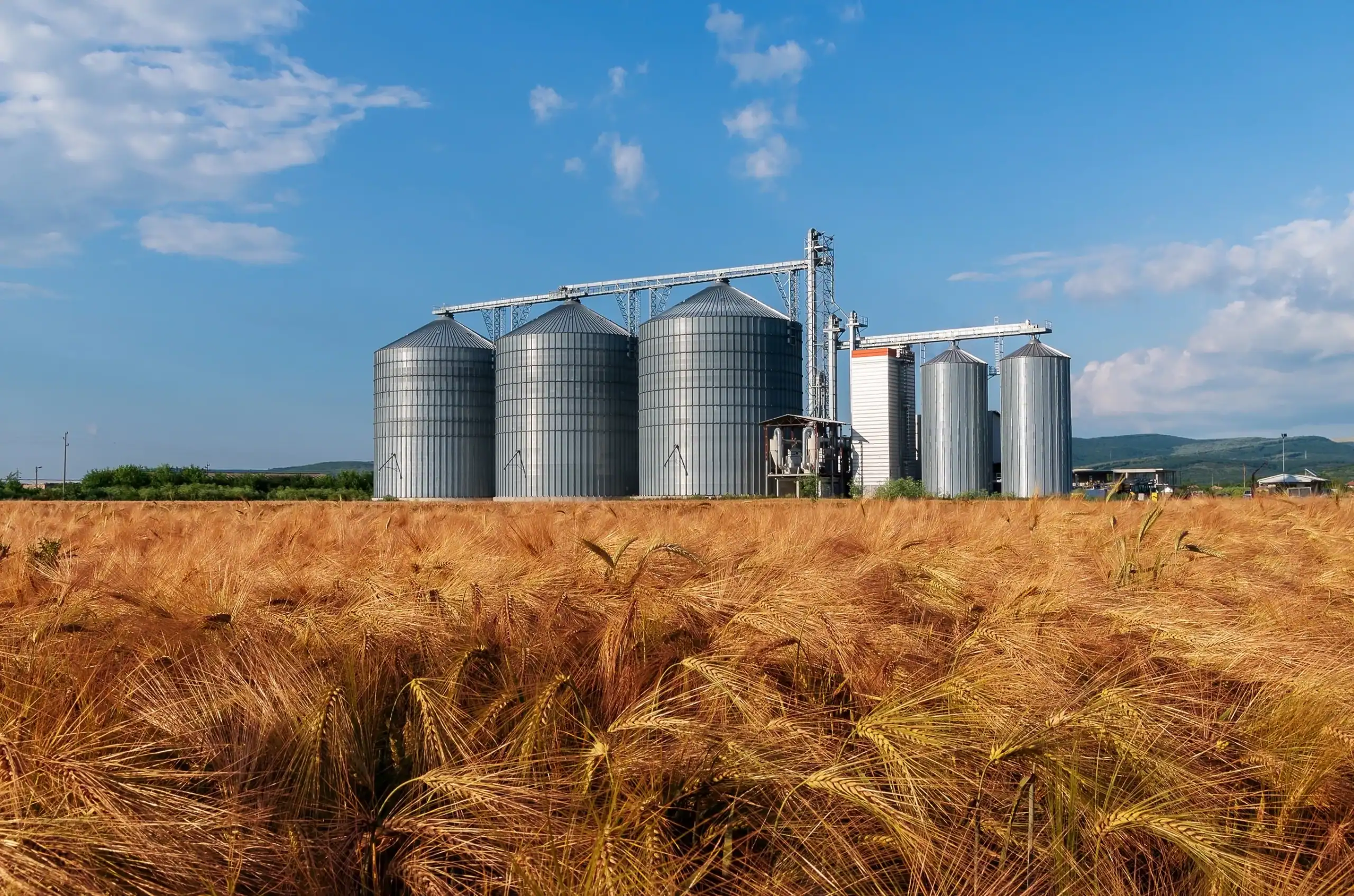
Diageo, Nestlé, and PepsiCo are among the global brands investing in LENs. Utility companies include Affinity Water, Anglian Water, SSEN and Yorkshire Water. In addition, local councils and public bodies fund farmers and support our operations – for example, Perth & Kinross Council, The Facility for Investment Ready Nature in Scotland, West Northamptonshire Council, and York and North Yorkshire Combined Authority.
See our full list of partners here.

With LENs, organisations can co-fund regenerative agriculture to mitigate environmental risks with outcomes they can report.
With LENs, organisations can co-fund regenerative agriculture to mitigate environmental risks with outcomes they can report. Co-funding reduces costs and maximises outcomes.


Through LENs, organisations can progress towards their Net Zero goals, as we provide primary carbon data on both scope 3 carbon reduction and carbon removals in value chains. Reporting is aligned with international carbon accounting standards.
We produce custom impact reports for each funding organisation, ensuring they have ready-to-report metrics. This is made possible by our ground-breaking Measurement, Reporting and Verification (MRV) allocation protocol.


By providing detailed reporting on biodiversity, water and soil health metrics, LENs enables some of the most advanced reporting towards corporate and public-sector sustainability goals in the market. This also provides accelerated learning with real-world insights on which on-farm practices generate the most impact.

Delivering outcomes across: carbon reduction & removals, water quality, biodiversity, flood risk mitigation and supply security.

Robust Measurement, Reporting and Verification aligned with credible standards including: SAI, GHG Protocol, and LSRG.

Secure their operations by supporting the landscapes they depend on. The types of risks we help mitigate include: sourcing risks by improving yields for crops of interest; costs of operating in a landscape; the likelihood of floods or droughts.

LENs implements regenerative agriculture programmes for funders, which means lower management time and costs compared to them doing this alone. This is particularly helpful for businesses with complex value chains, who typically don’t have direct access to farmers. By bringing together organisations across the rotation, funders can maximise outcomes and claims using fewer resources. In 2024, for example, LENs brought together eight organisations in the East of England, including food, beverage, water companies and the local council. This meant that 51% of measures were co-funded (up from 29% in 2023).

The more co-funding farms receive, the more environmental benefits will be accrued, which is good for farmers, funders and the landscape. Co-funding provides a genuine value for money proposition, as it means that multiple measures can be ‘stacked’ on the same farms or fields. This reduces the cost per hectare and generates greater impact with the same resources.
What does LENs fund?
LENs funds a range of regenerative agriculture practices. The most popular in 2024 were: reduced/no tillage, to minimise soil disturbance; reduced use of synthetic inputs, including fertilisers, herbicides and pesticides; planting and managing hedgerows; and keeping soils covered/living roots in the soil.
It also funds innovations – practices that are not pre-defined, such as trials relevant to a farm business or capital and in-field investments. Last year, these included direct drills, low disturbance subsoilers and yield monitoring on combine.
Our model is designed to pay farmers for specific interventions and practices rather than purely for end results. This approach ensures that the burden of delivery does not rest solely on farmers and that risk is shared between all parties. In 2025, we expanded our offering to introduce performance-based payments based on achieving the two higher levels of our Regen Pathway. Performance is determined by the number and extent of regenerative farming principles adopted on farm. We offer payment by practice for those starting out, and payment for performance for those further along in their Regen journey. This allows us to reward farmers for their holistic adoption of principles and meet them where they are at.

We introduced the LENs Regen Pathway before the SAI Platform launched its framework, and have ensured it not only aligns but exceeds the minimum thresholds.
Does LENs offer carbon credits?
No. LENs is not a carbon or nature credit system. We don’t report tradable outcome units or sell the outcomes from implemented practices as credits. Under carbon credit schemes, funding parties cannot mutually benefit from each other’s investments on the same farms (outcomes cannot be co-claimed).
What metrics does LENs report?
How is LENs MRV aligned with best practice?
To maintain integrity, LENs aligns with relevant existing and emerging standards. These standards provide rules and requirements around how outcomes are accounted for and reported.
These frameworks include the Greenhouse Gas Protocol’s Land Sector and Removals Guidance (LSRG) and the Science Based Targets initiative’s (SBTi) Forest Land and Agriculture Guidance (FLAG). LSRG and FLAG are particularly relevant for informing how LENs measures carbon reductions and removals and how these outcomes are then allocated to various demand-side parties.
The LENs MRV Protocol is reviewed on an annual basis to account for evolutions and new frameworks and standards.
If you’re not already in touch with our supply aggregators and want to find out more about LENs, please email the team at lens@the-lens.co or use the contact form here.
 https://staging.landscapeenterprisenetworks.com/wp-content/uploads/2025/10/river-wye-scaled.webp
1706
2560
Robbie Dawson
https://staging.landscapeenterprisenetworks.com/wp-content/uploads/2024/03/lens_logo.svg
Robbie Dawson2025-10-10 14:33:372026-06-12 14:00:44How LENs Works
https://staging.landscapeenterprisenetworks.com/wp-content/uploads/2025/10/river-wye-scaled.webp
1706
2560
Robbie Dawson
https://staging.landscapeenterprisenetworks.com/wp-content/uploads/2024/03/lens_logo.svg
Robbie Dawson2025-10-10 14:33:372026-06-12 14:00:44How LENs Works https://staging.landscapeenterprisenetworks.com/wp-content/uploads/2025/02/AdobeStock_90929140.webp
1201
1800
Robbie Dawson
https://staging.landscapeenterprisenetworks.com/wp-content/uploads/2024/03/lens_logo.svg
Robbie Dawson2025-08-21 12:58:552026-06-12 14:07:44Our Partners
https://staging.landscapeenterprisenetworks.com/wp-content/uploads/2025/02/AdobeStock_90929140.webp
1201
1800
Robbie Dawson
https://staging.landscapeenterprisenetworks.com/wp-content/uploads/2024/03/lens_logo.svg
Robbie Dawson2025-08-21 12:58:552026-06-12 14:07:44Our Partners https://staging.landscapeenterprisenetworks.com/wp-content/uploads/2025/08/regenerative-organic-farmer.webp
1707
2560
Robbie Dawson
https://staging.landscapeenterprisenetworks.com/wp-content/uploads/2024/03/lens_logo.svg
Robbie Dawson2025-05-01 01:00:342026-06-12 14:03:58For Farmers
https://staging.landscapeenterprisenetworks.com/wp-content/uploads/2025/08/regenerative-organic-farmer.webp
1707
2560
Robbie Dawson
https://staging.landscapeenterprisenetworks.com/wp-content/uploads/2024/03/lens_logo.svg
Robbie Dawson2025-05-01 01:00:342026-06-12 14:03:58For Farmers https://staging.landscapeenterprisenetworks.com/wp-content/uploads/2024/12/AdobeStock_86946879-crop-e1734616913381.webp
200
360
Richard Scott
https://staging.landscapeenterprisenetworks.com/wp-content/uploads/2024/03/lens_logo.svg
Richard Scott2023-11-06 12:32:482026-06-12 13:45:26News
https://staging.landscapeenterprisenetworks.com/wp-content/uploads/2024/12/AdobeStock_86946879-crop-e1734616913381.webp
200
360
Richard Scott
https://staging.landscapeenterprisenetworks.com/wp-content/uploads/2024/03/lens_logo.svg
Richard Scott2023-11-06 12:32:482026-06-12 13:45:26News